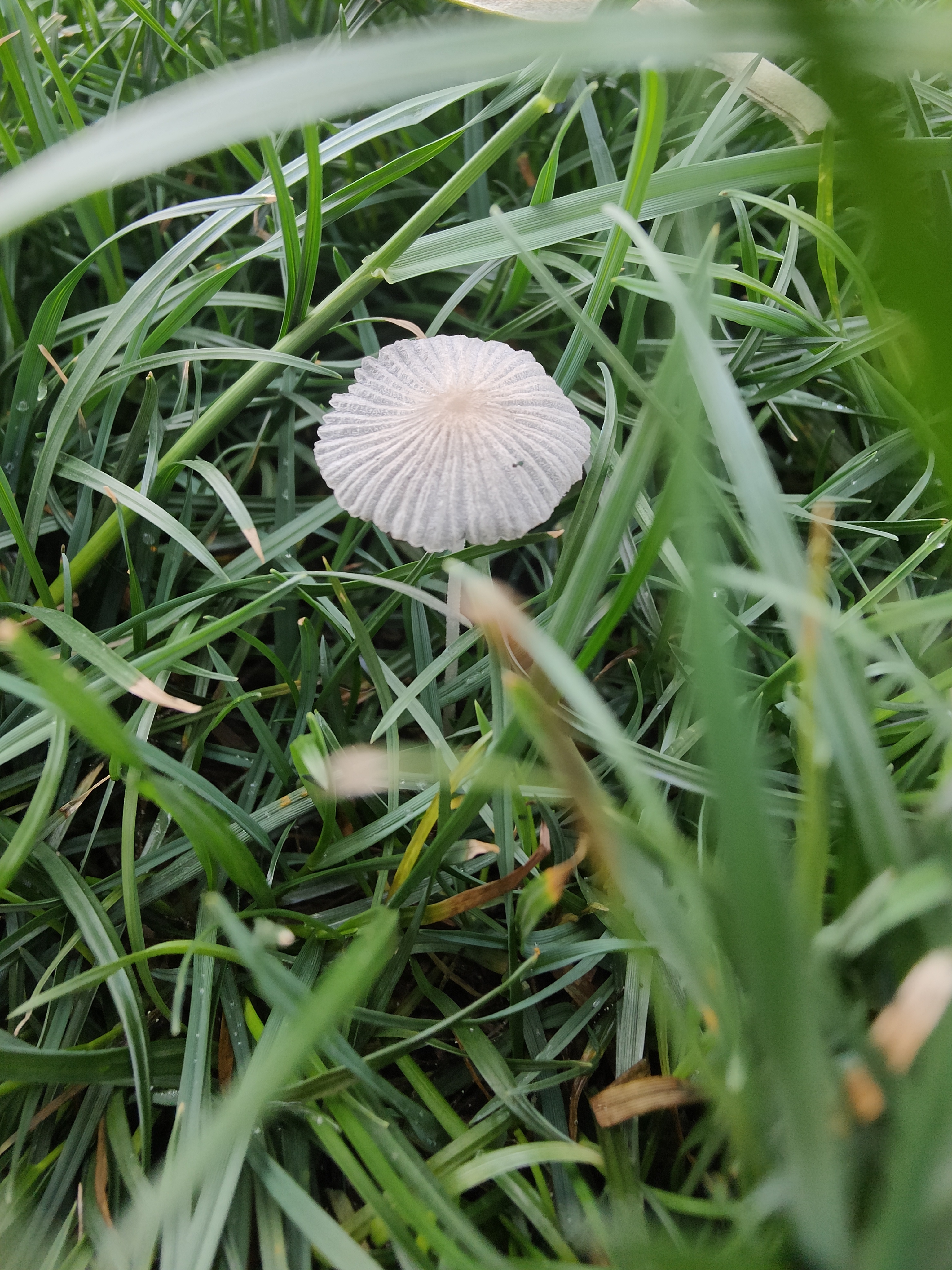
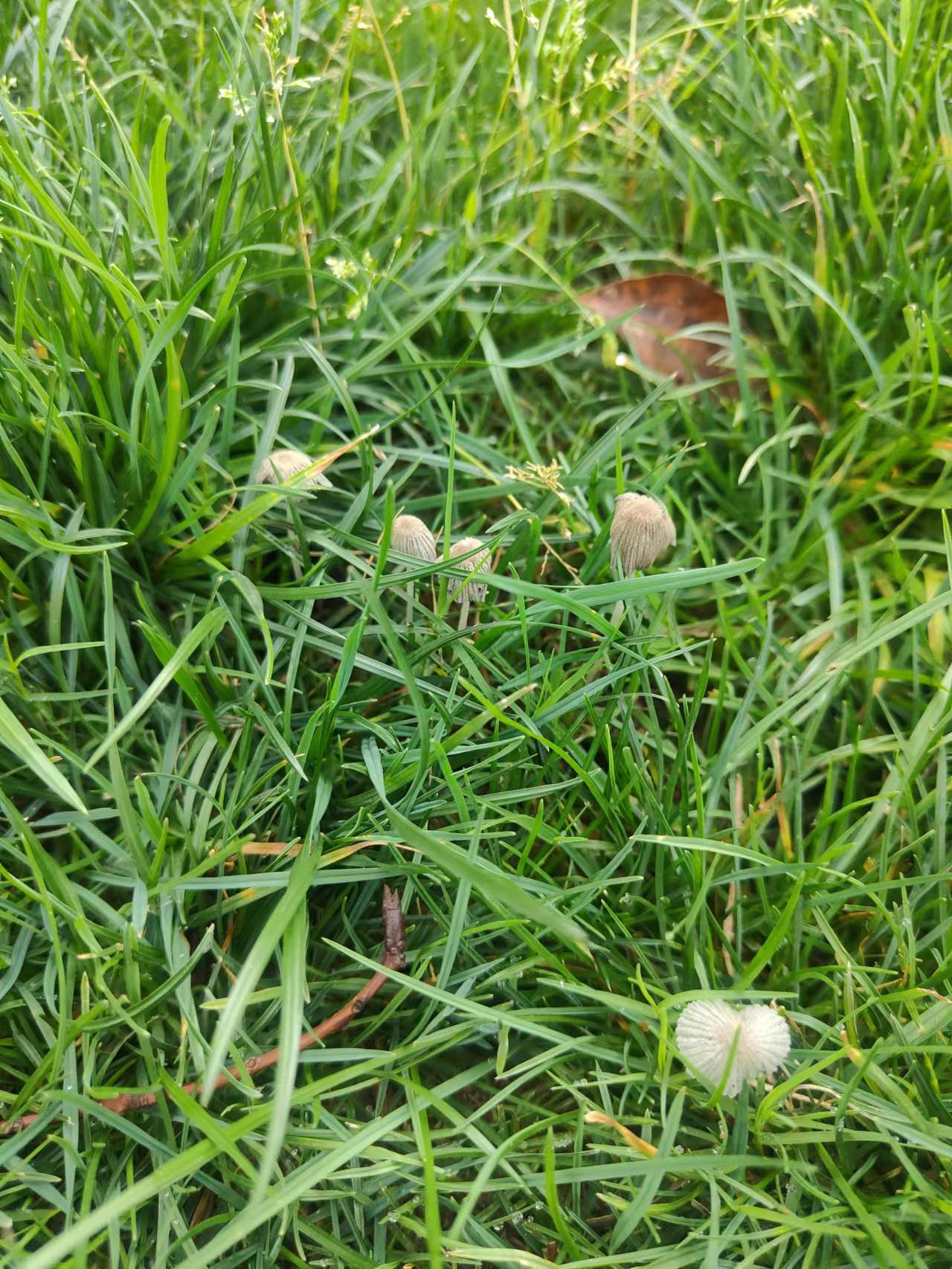
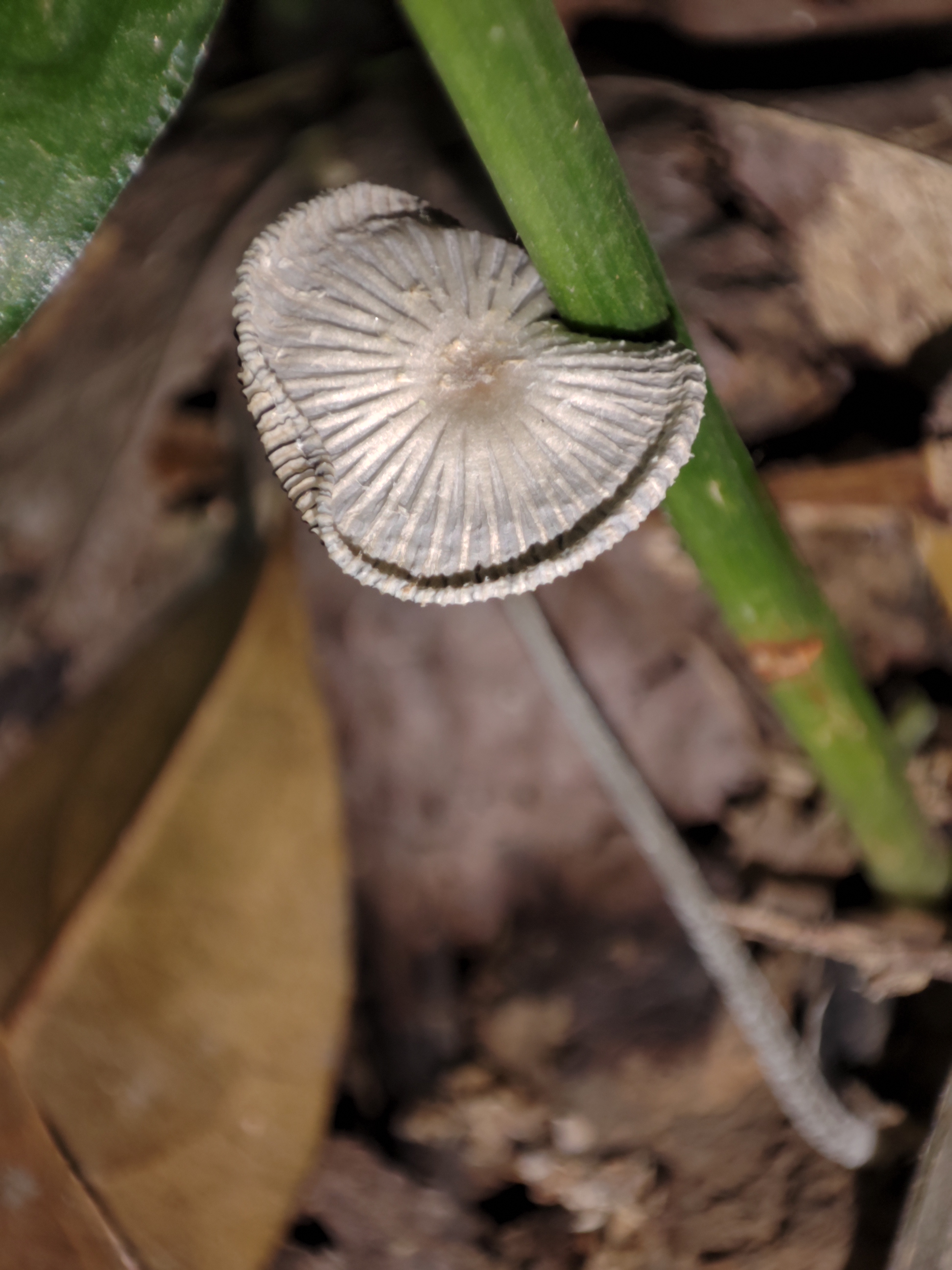
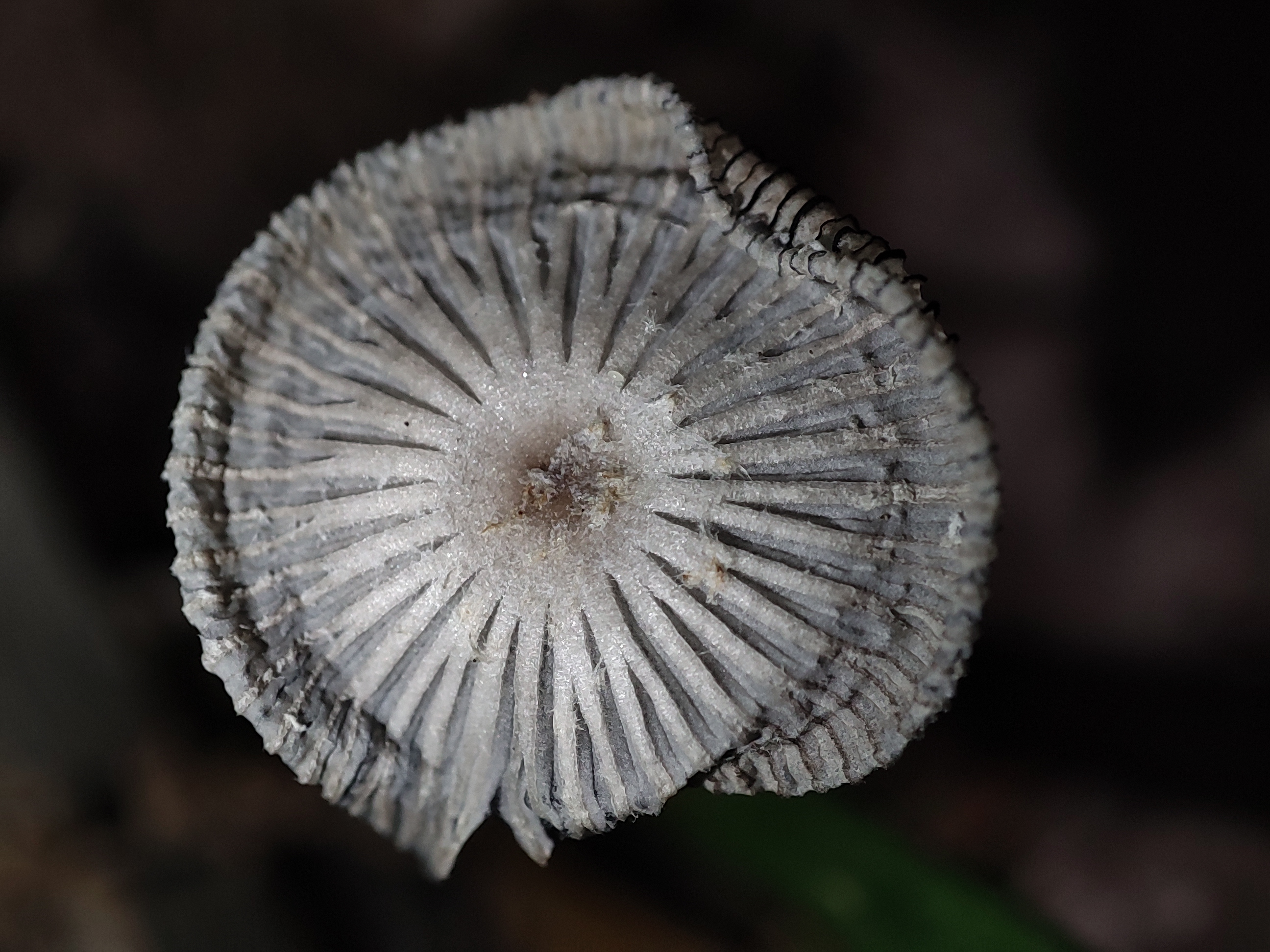
Pileus 1.5-2 cm. high, 1-1.5 cm. broad, just before rapid expansion begins, attaining a diameter of 5 cm. when expanded. At first ovate, becoming campanulate, finally plane, with revolute margin, and splitting longitudinally through gills. Pileus deeply striate radially, except on disk, striae forked. Cells on surface dome-shaped, capitate setae abundant when young. Margin uneven, often oblique. Color of pileus variable, yellowish-brown to reddish-brown, with decidedly darker reddish disk. Stipe 5-12 cm. long, 2-4 mm. thick, glistening white, even, hollow, longitudinally silkystriate, often twisted. Apex minutely pruinose, base with radiating ascending setae (especially evident in culture). Gills narrow, thin, crowded, free, membranous. Cystidia on surface of gills globose to pyriform, 35-50 µ across. Basidia two-spored. Spores black in mass, deep chestnut by trasmitted light, elliptical, apiculate, 12-15 x 8.5-10 µ. Habit gregarious in wild state, caespitose in culture. Occurs on dung hills and heavily manured soil.
4. Coprinus Sassii nom. nov.
Coprinus ephemerus f. bisporus Sass (1929)Illustrations : Lange 1952, Figs. 2, 10.
Pileus 0.8-2(-2.6) cm high, narrowly conic, expanding to obtusely conic, the margin finally recurving and splitting, surfacepruinose at frst but soon almost glabrous, moist, plicate-striate tothe disc but disc not differentiated by a sharp line, "russet" to "cinnamon brown" with a slight purplish fush when young,“mummy brown” when spores mature, the disc retaining a tawnytinge; flesh very thin, soft, delicate, odor and taste none ; lamellaevery narrow, free or just reaching the stipe, rather crowded,pallid, edge whitish but finally black over all as they deliquesce ;stipe 48 cm long, 2-3 mm thick, hollow, fragile and very delicate,white or more frequently flushed with color of the pileus frombase up. Spore deposit black, spores 12.8-20 X 7.9-11.0 p, average 15.2- 17.3×8.7-9.8μ, D/d= 1.7-1.75, almost terete, broadly ovate in face view, broadly elliptic-ovate in side viewdark brownblackish brown in KOH, germpore distinctly visible on abaxial side, large, about 2.5μ broad;basidia 18-38 x 9-12.5μ constantly two spored, dimorphic, the short type often considerably broader than the long one; paraphyses subglobose, 12-18 x 18-25μ; pleurocystidia scattered to abundant,vesiculose, 50-90 x 15-55μ;cheilocystidia similar but somewhat shorter, mostly 30-60 x 30 μ; gill trama scanty, hyphae about 3μ broad, a few of them with clamp connections, rusty brown near cap trama which is made up of narrow elements, rusty brown in KOH, cuticle of subglobose cells with rather thick walls, diam. 20-35μ, pilocystidia 30-100 x 4.5-16 x 1.5-5μ, generally rather thick-walled and brownish from the base up more or less, some of them typical sclerocystidia and all of them narrow, pedicellate to sessile, subventricose, acuminate, apex acute (subacute in one American coll.) the base frequently incrusted with hyaline material more rarely pilocystidial bodies are seen without a neckbut with a long pedicel.
Single spore mycelia from the same pileus always of two types with and without clamp connections, the former homothallic, the latter heterothallic,bipolar (“amphithallic” bipolar, cfr.Lange 1952).
Habit, habitat and distribution: Gregarious on horse-dung and on rotten straw, U.S.A.Denmark*Sweden*
Observations: The material described here evidentlybelongs in what Sass(1929)called C. ephemerus f bisporus.We have studied the type in the UniversityofMichigan Herbarium, and found it fully identical with our collections.In additionthe cultural characters were as described by SassIt is different from C.ephemerus (whichever concept of the latter one chooses to accept) by the characteristic pilocystidia and the outstanding color. In stature and color it resembles Chexagonosporus.We have a single American collectionfrom Kansasof a four-spored Coprinus probably closely related to C.Sassii but with more pro nounced purplish colors and smaller spores.Until more col- lections have been made, we hesitate to consider it the four-spored form of C.Sassii.The two-spored basidia of C.Sassii are a genetically constant feature as is evidenced by their occurrence through several generations in cultureThe sparinglyoccurring cystidia without necks might indicate a relationship to species with sphaerocysts.